
From Patent to Trademark: How Strategic IP Planning Protected a Product’s Design Long After Patent Expiration By John J. Bamert, Esq.
Bamert Regan PLLC obtained a permanent injunction and $2.2 million judgment by enforcing the shape of a handheld light as a trademark 15 years after expiration of the related design patent. This result underscores the importance of strategic preparation in protecting the intellectual-property moat around businesses.
Entering Market with Initial Patent Protection
Laughing Rabbit, Inc. (“LRI”) defined a category of portable lights known as “micro lights”. LRI’s flagship product is known as a Photon® light, which is widely used in professional, military, and recreational settings in a variety of applications from use as flashlights to UV applications, such as curing adhesive or spotlighting scorpions. LRI uses the highest quality components and materials and provides a no-questions-asked, lifetime warranty. LRI upholds such high standards for the reliability and performance of Photon® lights that they became synonymous with U.S. manufacturing quality. Accordingly, Photon® lights have been employed by NASA astronauts on critical space missions and by deployed U.S. military personnel. As shown below, however, the Photon® lights do not noticeably display the business name, the business logo, or the Photon® mark. So how can consumers determine whether a micro light is a Photon® light?
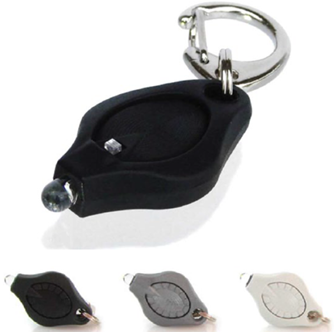
The shape of the Photon® light is distinct, but product shapes cannot immediately be registered as trademarks because they are considered “descriptive” by the U.S. Patent and Trademark Office (they can be registered on the Supplemental Register but not the Principal Register). Accordingly, LRI obtained U.S. Design Patent No. D375,372 directed toward the non-functional, ornamental shape of the Photon® light in 1996.
Protecting Against Post–Patent Copying with Product Shape as Trademark
No patent lasts forever. The patent expired in 2010. Years later, however, a new competitor appeared on the scene, selling large volumes of competing lights embodying the Photon® shape and refusing to cease. The risks to LRI were serious: loss of sales, customer confusion, and damage to the LRI’s reputation.
Without a patent, one might think that LRI was out of options, but LRI’s attorneys set LRI up for success beyond the life of the patent. Through early and consistent enforcement of the design patent by Bamert Regan attorney Michael J. Folise, Esq., LRI secured and maintained substantially exclusive use of the distinct Photon® shape. The exclusivity of the shape in the market enabled consumers to associate it with LRI’s Photon® lights. For this reason, LRI succeeded in registering the Photon® shape in 2003 as a trademark with U.S. Trademark Registration No. 2,791,033.
This registration was key to deepening and widening LRI’s moat around its products. Unlike patents that have expiration dates, trademark registrations can be maintained as long as the mark is used in commerce. Accordingly, LRI’s preparation and active enforcement enables it to maintain exclusivity in the market well after expiration of the patent through its product shape as a registered trademark.
Case of First Impression: Product-Configuration Counterfeiting
This post–patent case was one of first impression. The competitor here argued that the accused light was merely a single component in a larger tool kit for applying and curing adhesive and that it therefore could not infringe the registered mark of the light on its own or be a counterfeit of the registered light shape.
Bamert Regan defeated both arguments. The Court held that the accused lights are counterfeits, regardless of whether they are sold on their own or as part of a larger kit. In particular, Bamert Regan successfully enforced the Photon® shape as a trademark to obtain a judgment awarding LRI not only $2.17 million but also a permanent injunction prohibiting the competitor from importing, offering, advertising, or selling lights that look similar to the Photon® shape, whether on their own or as part of a larger kit.
Takeaway: Combinations of IP Assets Work in Tandem
This case is an example of how a design patent enables securing early exclusivity in the market to pave the way for registering the product shape as a trademark, which in turn facilitates maintaining the exclusivity beyond the life of the patent. Before a product shape (also known as a product configuration in the trademark context) can be registered on the Principal Register, which provides enhanced rights, the product shape can be registered on the Supplemental Register. The Supplemental Register provides certain benefits, such as preventing others from registering confusingly similar marks, but the design patent excludes others from using similar shapes in the market. This exclusivity is a prerequisite to subsequently registering the shape on the Principal Register. In particular, a period of five years of substantially exclusive use can show the U.S. Patent and Trademark Office that the mark has acquired distinctiveness as an indicator of source in the market. Accordingly, the assets of the patent and the trademark registration worked hand-in-hand to secure LRI’s wide and deep moat in the market.
Early evaluation of each business’s goods and services and long-term objectives facilitates development of an IP strategy to optimize not only the size of the IP portfolio but the ability of the IP assets to work together in tandem to provide a combined value that systematically exceeds the sum of the individual parts. Here, the combination that carried the day was a design patent followed by a registered trademark. In other circumstances, different IP assets should be evaluated, such as not only design patents and trademarks but also utility patents, copyrights, or trade secrets. Such assets should of course always be considered in view of the marginal cost and marginal benefit that each of those assets brings to the business, but in some circumstances, a combination may increase the marginal benefit greater than each asset individually.
Attorneys John J. Bamert, Esq., Kevin E. Regan, Esq., and Lauren A. Salatto-Rosenay, Esq. of Bamert Regan PLLC represented Plaintiff Laughing Rabbit, Inc. in Laughing Rabbit, Inc. v. Laser Bonding Tech., Inc., 2:20-cv-01513-RSL (W.D. Wash).
© 2025 Bamert Regan PLLC